
Is Your Oxfordshire Business Sitting on an Untapped Energy Asset?
From Oxford’s science parks to the county’s industrial estates, existing commercial buildings could be doing more than providing workspace and storage. Their rooftops could be generating electricity, reducing operating costs and helping businesses take control of their energy future.
For many businesses across Oxfordshire, electricity is an essential but increasingly significant operating cost. Offices need power for lighting, IT and air conditioning. Warehouses rely on lighting, handling equipment, refrigeration and charging infrastructure. Manufacturers, laboratories and technology businesses often have substantial and continuous electricity requirements.
Yet above many of these workplaces sits an underused asset: a large, exposed rooftop. Recent coverage in the Oxford Mail, highlighting calls for Oxfordshire businesses to consider rooftop solar, reflects an important opportunity for commercial property owners and occupiers. Rather than viewing solar as something that belongs on new buildings or residential rooftops, businesses can increasingly look at their existing premises and ask a straightforward question: could our roof help power our business?
At Chiltern Solar, we believe that retrofitting solar panels to suitable existing offices, warehouses and industrial buildings represents a practical opportunity for Oxfordshire businesses to reduce electricity expenditure, improve energy resilience and make better use of the property they already occupy.
Why existing industrial buildings are ideal candidates for solar
Commercial and industrial buildings can offer several advantages when it comes to solar photovoltaic (PV) installations.
Large roof areas with significant generating potential
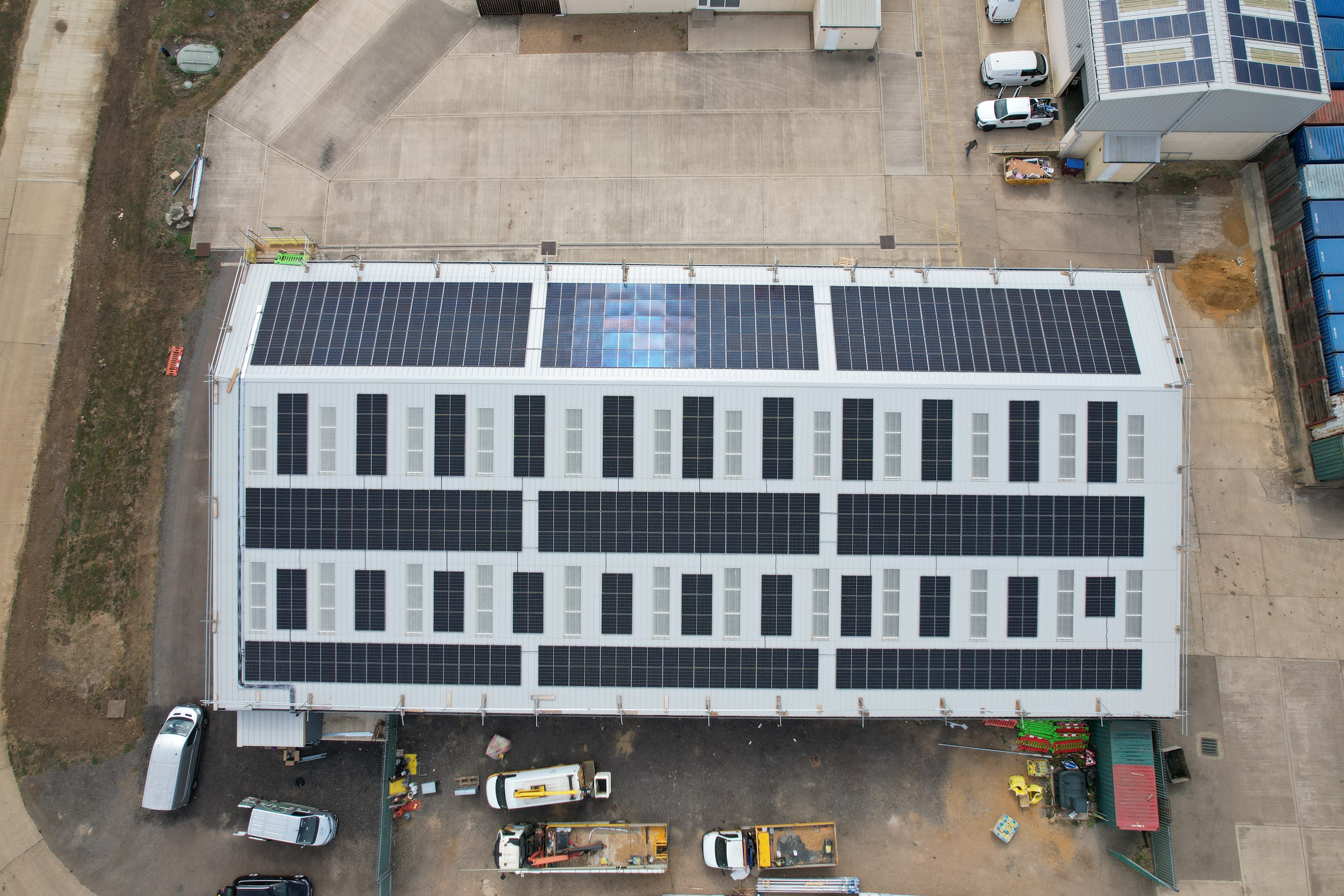
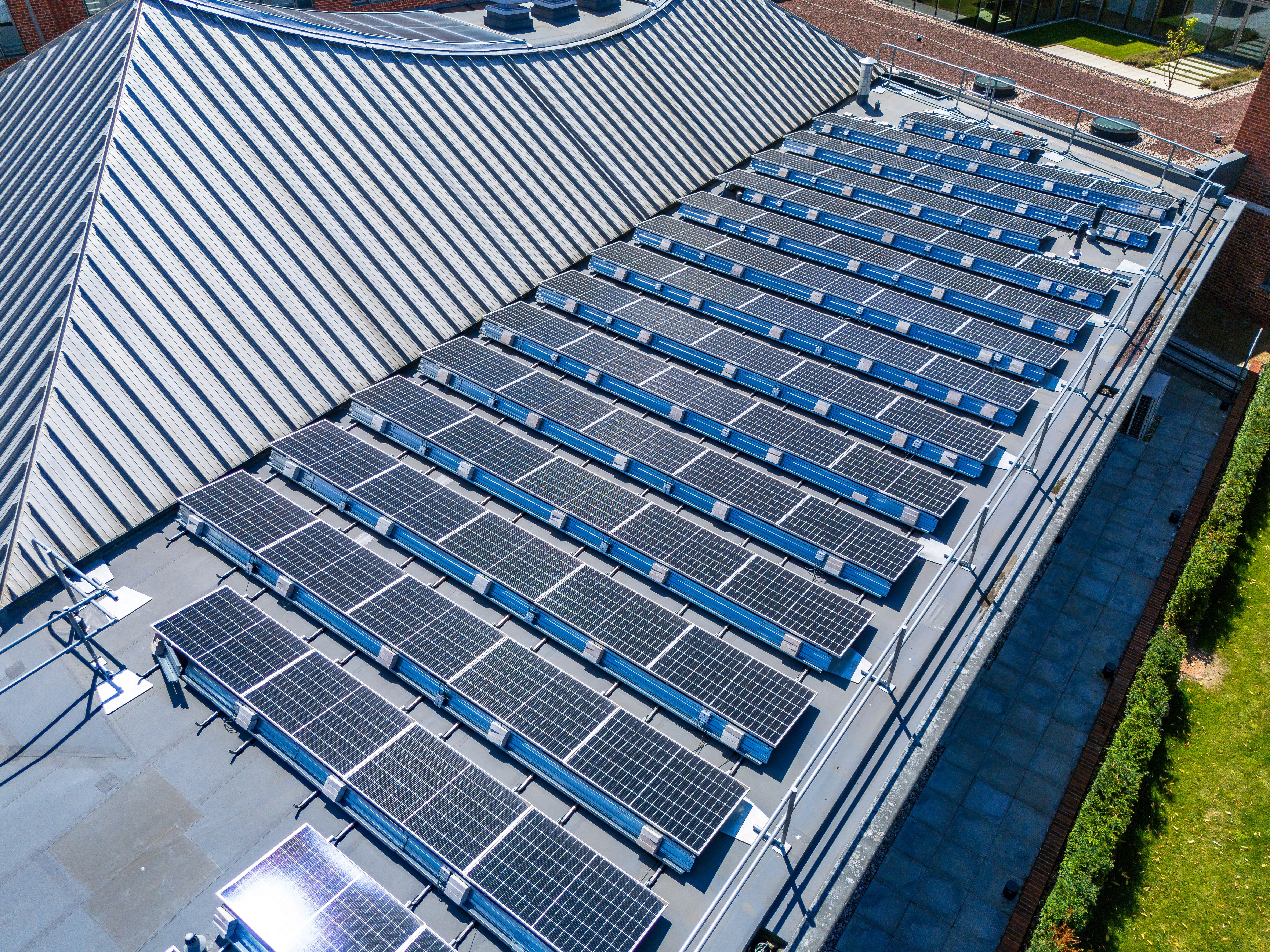
Warehouses, distribution centres, trade counters and industrial units often have extensive roof space that receives sunlight throughout the day. Unlike ground-mounted solar farms, rooftop installations can generate electricity without taking up valuable yard space, parking areas or land that a business may need for future expansion. The available area will depend on the building's layout, roof structure, orientation, shading and the space required for maintenance and fire-safety access. Nevertheless, even a partial rooftop installation can make a meaningful contribution to a site's electricity requirements.

Generating electricity where it is needed
One of the strongest commercial arguments for solar is the opportunity to use the electricity as it is generated. Many offices, warehouses and industrial operations consume electricity during daylight hours, when solar panels are producing power. This can allow businesses to use a substantial proportion of their own generation rather than purchasing the equivalent electricity from their supplier. The financial benefit depends on the site's consumption profile, electricity tariff, system design and installation cost. A business that consumes a large proportion of its solar generation on site will generally derive greater value from that electricity than one that exports most of it to the grid.
Making better use of existing assets
Installing solar does not necessarily require relocating operations, purchasing additional land or constructing a new building. For suitable premises, a retrofit can integrate renewable generation into the existing property, helping the business make better use of its infrastructure while supporting longer-term property and sustainability objectives. For landlords, solar can also create opportunities to improve a building's energy credentials and potentially make it more attractive to prospective tenants, subject to the commercial arrangements and benefits being properly aligned.
Energy performance standards for commercial landlords
Improving a commercial building’s energy performance can help reduce running costs and strengthen its appeal to prospective tenants. It also helps landlords prepare for changes to energy efficiency requirements. In England and Wales, rented commercial properties covered by the current rules must have an Energy Performance Certificate (EPC) rating of at least E, unless a valid exemption is registered.
Under the government’s latest proposals, rented commercial buildings larger than 1,000 square metres would need to achieve EPC B from 2031, where improvements are cost-effective. These proposals are not yet law. Smaller buildings would remain subject to the current EPC E minimum, with no new deadline to achieve a higher rating. The previously proposed EPC C deadline for 2027 is no longer being taken forward.
For landlords of larger offices and warehouses, planning ahead creates an opportunity to coordinate energy improvements with roof refurbishment, maintenance or lease renewals. Rooftop solar can form part of this approach, helping reduce reliance on purchased electricity and potentially improving the building’s EPC rating. A qualified commercial energy assessor should assess its contribution alongside improvements to lighting, insulation and heating, as solar alone does not guarantee a particular rating.
Oxfordshire's industrial estates: an opportunity hiding in plain sight
Oxfordshire has a diverse commercial property landscape, encompassing established industrial estates, logistics facilities, technology businesses, research environments and modern office developments. Across these locations, businesses and property owners may have an opportunity to assess whether their existing rooftops could support solar generation.
Areas worth considering include:
Blackbird Leys – industrial and commercial premises where roof suitability and on-site electricity demand could make a solar assessment worthwhile.
The Oxford Science Park – office, research and technology facilities with potentially valuable daytime electricity demand.
Langford Lane Industrial Area – commercial and industrial buildings that may benefit from a review of available roof space and energy consumption.
Oxford Industrial Park – an opportunity to assess suitable industrial units and commercial buildings for rooftop generation.
Monument Business Park – premises where solar could support businesses seeking to reduce electricity costs and operational emissions.
Kings Meadow and Ferry Meadow – commercial premises that may warrant consideration for rooftop solar, subject to individual site conditions.
Kings Mead and the Curtis Industrial Estate – further locations where owners and occupiers could investigate the potential of their existing buildings.
Network Oxford Trade City – trade and distribution premises where daytime energy consumption may align well with solar generation.
Horspath Industrial Estate – an additional area in which suitable commercial roofs could offer opportunities for on-site renewable electricity.
These locations are examples of where a targeted assessment could be valuable, rather than a verified survey of every building or an assertion that the estates currently lack solar installations.
Some premises may already have solar, while others may have roofs, leases or electrical infrastructure that make installation unsuitable. The opportunity is to identify the buildings where the combination of available roof space, electricity demand and technical feasibility makes a compelling commercial case.
What could solar mean for your business?
Every commercial solar project is different. The potential return depends on the building, its electricity consumption, the amount of usable roof space and the cost of delivering a suitable installation. However, the benefits can extend beyond reducing the electricity bill.
Lower electricity purchasing costs
Solar generation can displace electricity that would otherwise have to be purchased from the grid. For businesses with substantial daytime demand, this can provide a valuable reduction in operating expenditure. A proper feasibility assessment should compare the expected generation profile against the site's actual electricity consumption, ideally using half-hourly meter data.
Greater visibility over future energy costs
Generating a proportion of your own electricity can reduce exposure to fluctuations in electricity prices. While solar does not eliminate the need for a grid connection or guarantee a fixed overall energy cost, it can provide a more predictable element of the site's energy supply over the life of the system.
Reduced operational carbon emissions
Using self-generated solar electricity can reduce reliance on grid electricity and contribute to a business's carbon-reduction objectives. This may be particularly relevant to organisations with environmental reporting commitments, supply-chain requirements or broader sustainability targets.
Supporting electrification and future growth
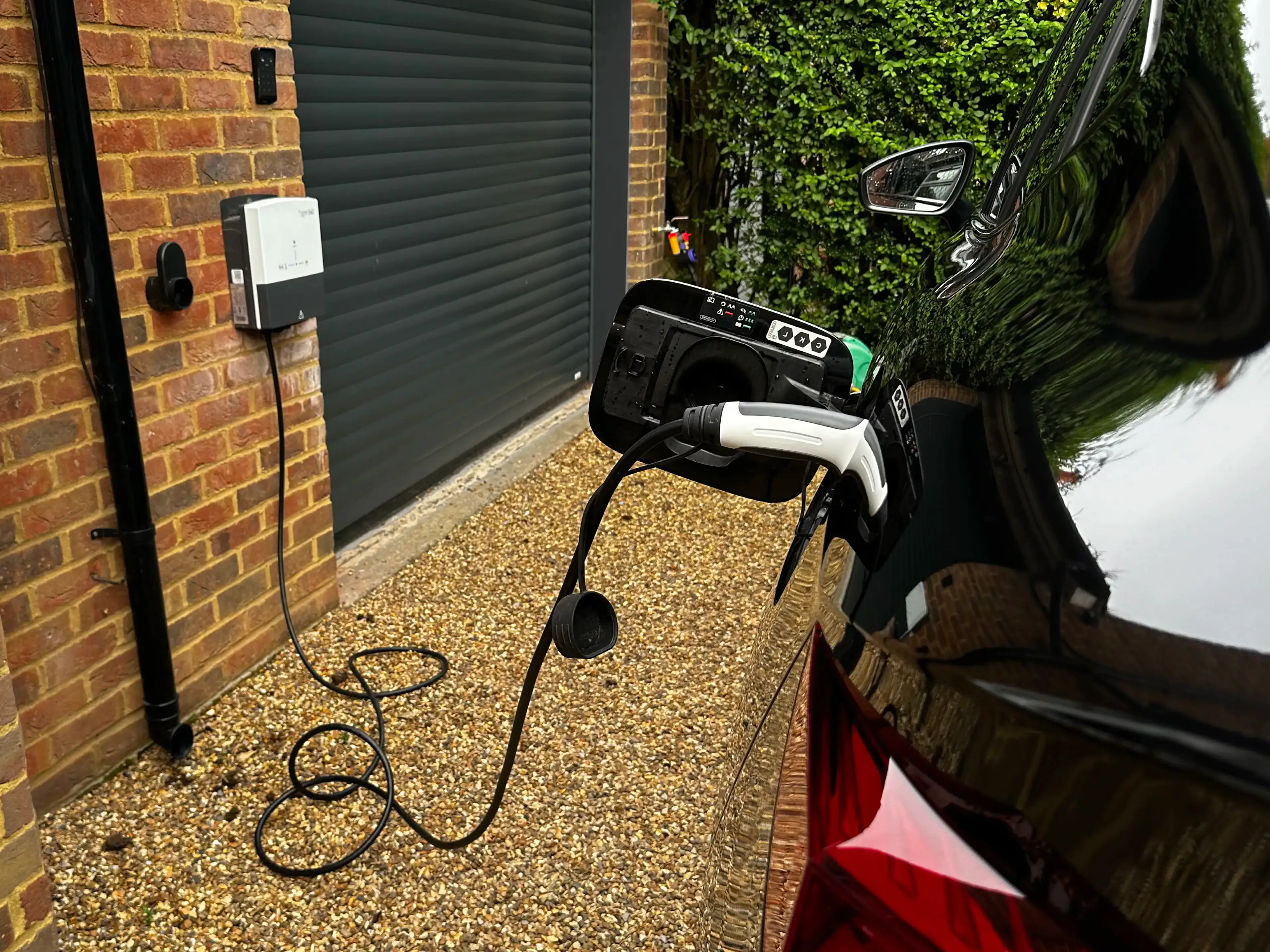
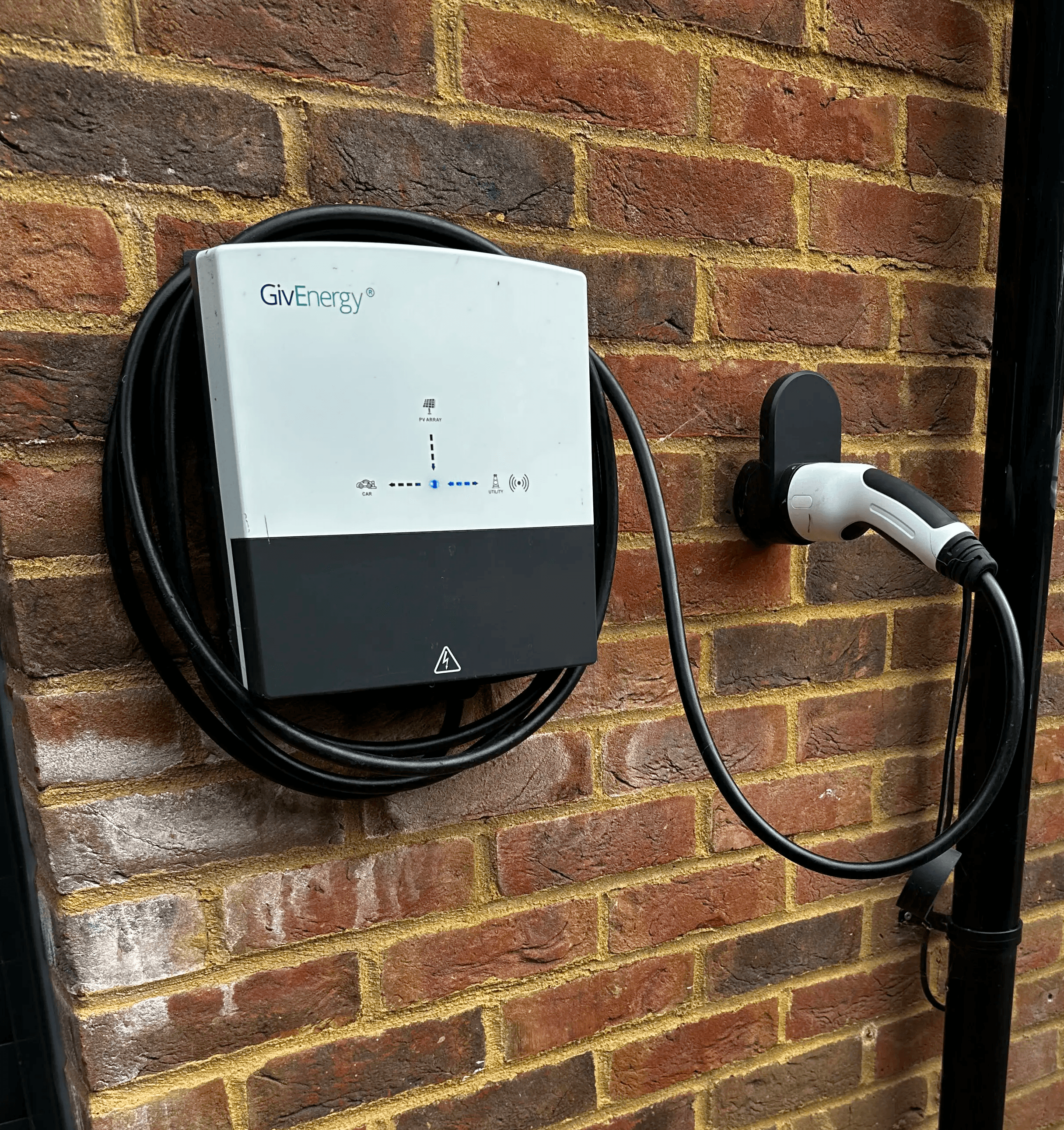
As businesses introduce electric vehicle charging, electric heating, additional equipment and other electrical loads, their electricity requirements may change. A well-designed solar installation can help support these developments. In some cases, battery storage may also help businesses make greater use of their own generation, although its financial case needs to be assessed separately.
What about installing solar on an existing warehouse or office roof?
A common misconception is that solar is only practical on new buildings. In reality, existing premises can be excellent candidates, provided the necessary checks are completed before installation. There are several important considerations.
Roof condition and structural capacity
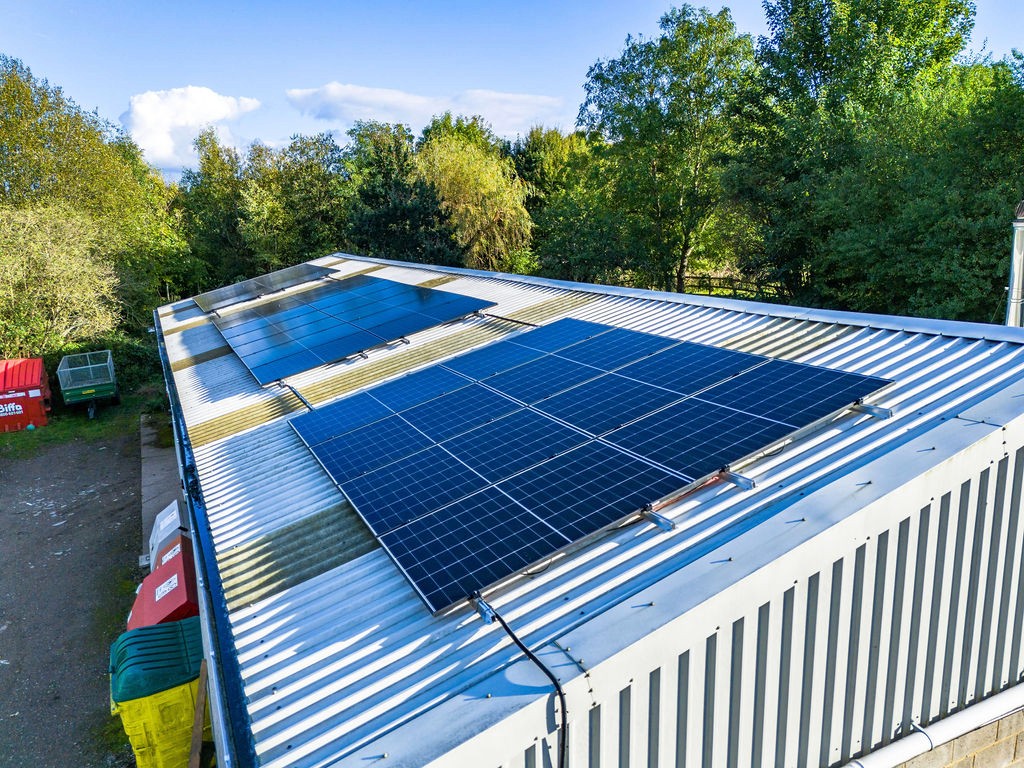
The roof must be capable of accommodating the proposed installation. Its age, condition, waterproofing, construction and remaining service life all matter. A structural assessment may be required, particularly for large industrial roofs. Where a roof is nearing the end of its useful life, it may make sense to coordinate solar installation with planned roof refurbishment rather than incur avoidable costs later.
Electrical infrastructure
The building's existing electrical supply, distribution equipment, available capacity and consumption profile will influence the system design. Larger commercial systems may require additional electrical works and careful coordination with the distribution network operator.
Grid connection and export limitations
A large roof does not automatically mean that the building can export all surplus electricity to the grid. Network capacity, connection requirements and export limits need to be considered early in the project. In some cases, a system designed primarily to serve on-site demand, potentially with an export limitation, may be more commercially attractive than one sized to maximise generation.
Planning, access and operational requirements
Planning requirements must be checked for the specific property, including any relevant restrictions. Safe roof access, maintenance routes, fire-safety considerations, equipment clearances and the need to maintain normal business operations must also be incorporated into the design. These checks help establish whether a proposed installation is practical before significant expenditure is committed.
Is battery storage worth considering?
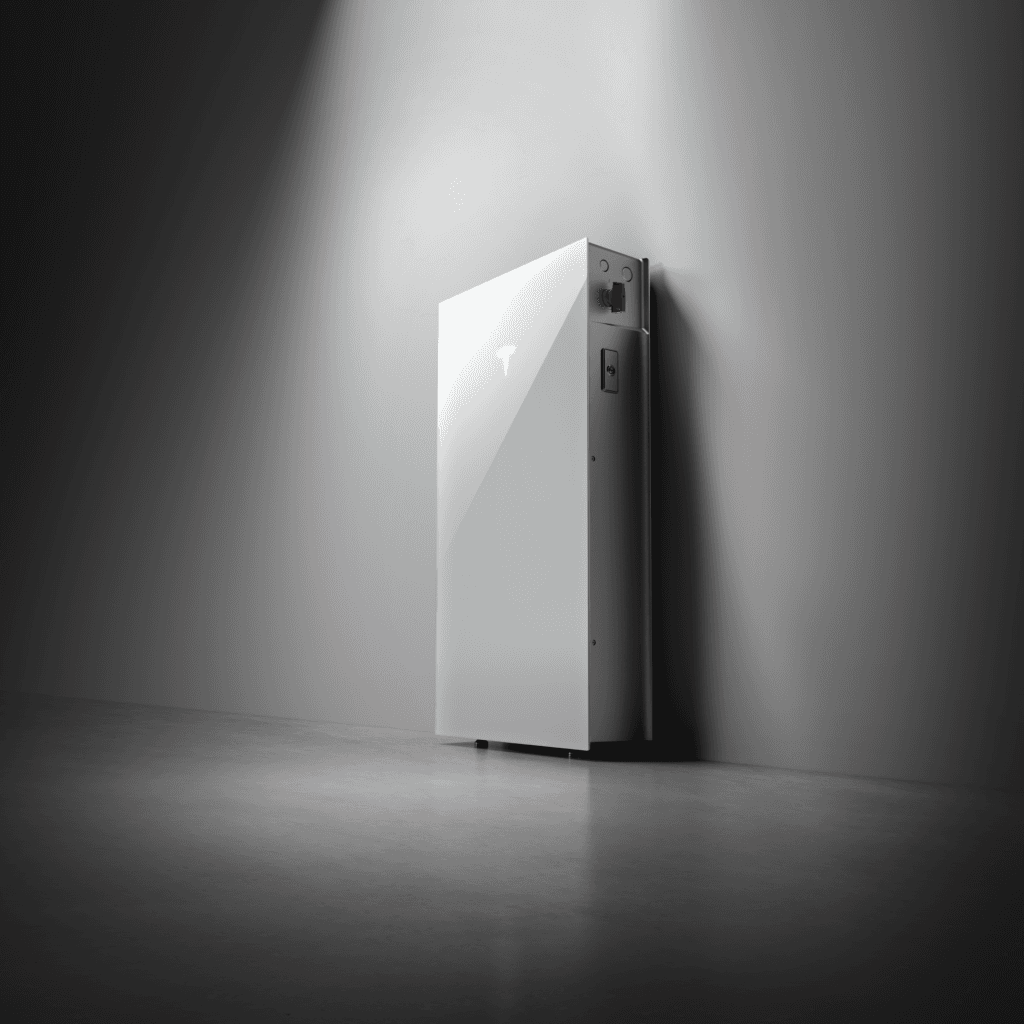
Solar panels generate electricity during daylight hours, but a business's demand does not always follow the same pattern. Where generation exceeds immediate consumption, battery storage may allow some of that surplus electricity to be stored and used later. This could be beneficial for businesses with early-morning or evening demand, suitable charging loads or operational patterns that create a mismatch between generation and consumption. However, batteries are not automatically the right answer. Their cost, usable capacity, power rating, operating strategy and expected savings all need to be assessed against the site's actual energy profile.
For many businesses, the sensible starting point is to understand the value of rooftop solar on its own, then determine whether adding storage would improve the overall investment.
Battery backup during a power cut
Battery storage can also provide backup power for selected essential equipment during a power cut, if the installation is specifically designed for this purpose. Depending on the system and the business’s requirements, this could support equipment such as IT systems, communications or essential lighting.
Backup is not included with every battery installation. Standard grid-connected solar panels shut down during a power cut for safety, and backup requires compatible equipment and controls that safely isolate the premises from the grid. The battery’s usable charge, power output and connected loads determine what it can run and for how long. These requirements should be discussed at the design stage.
Who owns the building matters — but it need not stop the conversation
Not every business occupying an industrial unit owns its premises. For tenants, a rooftop solar project may require the landlord's agreement, particularly where the roof, electrical infrastructure or building structure is affected.
That does not mean the opportunity should be dismissed.
Landlords and tenants can explore arrangements that align the investment with the benefits, including landlord-funded installations, tenant electricity-purchasing arrangements or suitable third-party funding models.
For property owners with multiple buildings, a portfolio-wide assessment may also help prioritise the sites with the strongest potential before considering a phased investment programme.
The important first step is to understand the opportunity at each property and establish a commercially workable arrangement.
Financing your commercial solar installation
The upfront cost of a solar installation can be a consideration for businesses, particularly when working capital is needed elsewhere. Chiltern Solar works with Sustainable Energy Finance Limited to offer finance options for commercial solar PV and battery energy storage projects, alongside outright purchase.
Depending on the project, options include hire purchase, leasing and business loans. These can help spread the cost over time, with different arrangements for system ownership and repayments.
A Power Purchase Agreement (PPA) may also be suitable for some businesses. Under this arrangement, a third party funds and owns the solar system, and the business buys the electricity it generates at an agreed rate under a long-term contract. This can allow a suitable project to proceed without an upfront installation cost.
The best route depends on your budget, property arrangements and expected energy savings. Repayments or electricity purchase costs should be included in the business case. All finance options are subject to credit approval and applicable terms and conditions.
Find out more about Chiltern Solar’s finance soutions or speak to our team about funding your project.
Start with the numbers, not the number of panels
A successful commercial solar project should begin with the business case, not an arbitrary system size.
At Chiltern Solar, we believe that the most useful starting point is to establish:
How much electricity your premises consume and when they use it.
How much suitable roof space is available.
Whether the roof and electrical infrastructure are suitable.
How much electricity a proposed system could generate and how much could be used on site.
The likely installation cost, savings, payback period and longer-term financial return.
Whether battery storage, export arrangements or future electrical demand should influence the design.
With these factors understood, businesses can make an informed decision about whether solar is worth pursuing and what scale of installation makes sense.
Could your Oxfordshire premises be next?
The roofs above Oxfordshire's offices, warehouses, industrial units and commercial facilities represent an opportunity to generate electricity closer to where it is consumed.
For some businesses, rooftop solar could deliver a compelling reduction in electricity purchasing costs. For others, roof condition, limited daytime demand or grid constraints may make an installation less attractive. The answer depends on the individual building and business.
What matters is not simply whether a roof can accommodate solar panels, but whether a carefully designed installation can deliver a worthwhile commercial return.
Chiltern Solar helps businesses turn suitable rooftops into productive energy assets.
If you own or occupy an office, warehouse or industrial unit in Oxfordshire — whether at one of the locations highlighted above or elsewhere in the county — we can help you explore the potential of commercial rooftop solar.
Contact Chiltern Solar to discuss your premises and arrange an initial assessment of your commercial solar opportunity.
Make your roof work harder for your business.

Other contributors
Other team members that contributed to this article

Share this article
We'd really appreciate you helping to get the word out, you can share this page via any social media channels or to friends and family via WhatsApp.
Share on Facebook
Share on Twitter/X
Share on WhatsApp
Share via Email
Copy website address to clipboard
Other recommended news items
In our news items, we share company updates and commentary on wider events within the renewable energy market.